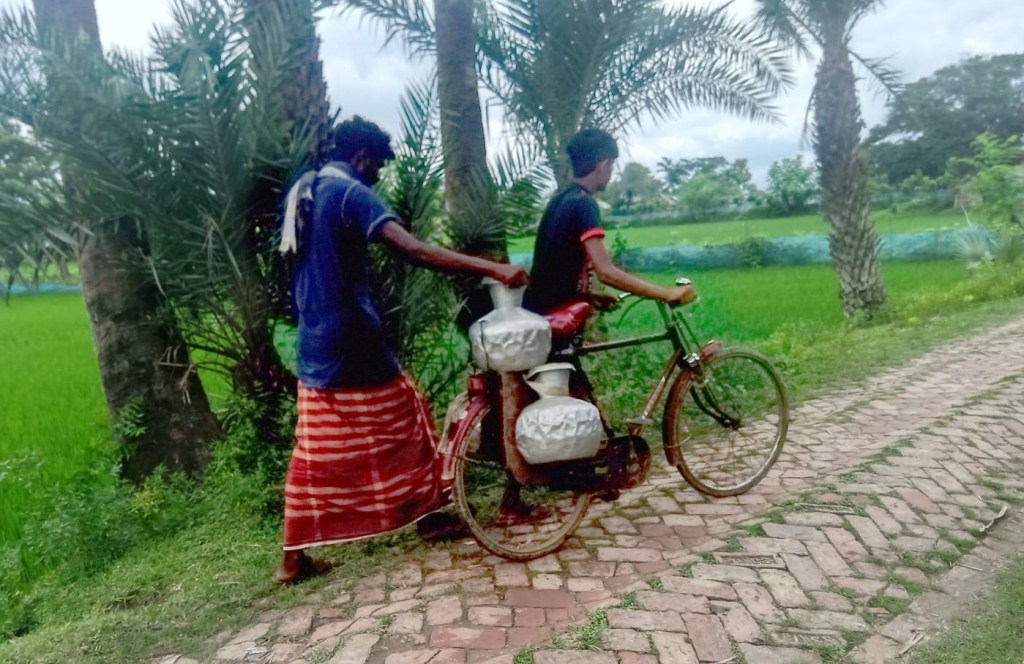
In a landmark verdict, Bangladesh’s High Court has declared access to safe drinking water a fundamental right of every citizen. The ruling marks a significant milestone in the country’s water governance, public health protection, and state accountability. Against the backdrop of arsenic contamination, salinity in the coastal belt, urban water scarcity, and the escalating pressures of climate change, the verdict is being widely viewed as a turning point in the pursuit of water justice in Bangladesh.
The High Court, through multiple observations, reaffirmed that access to safe water is a basic human right intrinsically linked to the constitutional right to life (Article 32) and human dignity. The Court emphasized that without ensuring safe drinking water, it is impossible to safeguard public health, humane living conditions, and social justice.
Court Directives: What the State Must Do
To ensure the provision of safe drinking water, the High Court issued a set of clear and binding directives to the government, including:
- Taking necessary conservation measures to ensure that all water sources across the country are not depleted, dried up, or contaminated
- Implementing effective policy and administrative actions to protect water sources and regulate water quality
According to the Court’s directives:
- Within one year, safe drinking water must be ensured for citizens at all major public places, including railway stations, bus terminals, launch terminals, airports, marketplaces, shopping malls, government hospitals, religious institutions, all public educational institutions, courts and bar associations, remote hill tracts, and saline-prone coastal areas.
- Within the next ten years, the state must ensure free access to safe drinking water for all citizens and affordable potable water for other uses nationwide.
- By 2026, the government must submit a detailed report to the Court outlining the measures taken to ensure free and safe water supply at all public places.
Through this verdict, the Court has imposed a clear legal obligation on the state to guarantee safe, accessible, and affordable drinking water for every citizen.
Why Safe Water Is a Fundamental Right: The Court’s Reasoning
The Court’s reasoning highlights that:
- Life, health, and human dignity cannot be ensured without access to safe water
- Contaminated water poses severe and direct risks to public health
- Policy and administrative failures in water supply and source protection amount to violations of citizens’ fundamental rights
The verdict firmly establishes safe water not as a charity-based service, but as a rights-based obligation of the state.
The Reality of Safe Water in Bangladesh: Progress and Challenges
Although Bangladesh has made notable progress in expanding access to improved water sources, ensuring water quality remains a major challenge.
Key Facts at a Glance
- Nearly 98% of the population uses improved water sources, yet
- Approximately 20–22 million people remain exposed to arsenic contamination
- More than 35 million people in coastal areas face water insecurity due to salinity intrusion
Major Challenges
- Arsenic contamination in groundwater
- River pollution caused by industrial and urban waste
- Increased droughts and floods due to climate change
- Rising salinity in coastal water sources
- Unequal access to water in urban slums and informal settlements
Policy–Implementation Gaps
Despite having a National Water Policy, Safe Water and Sanitation strategies, and commitments under SDG 6, several structural gaps persist:
- Shortage of technical and financial capacity at the local government level
- Inadequate monitoring, data transparency, and accountability on water quality
- Insufficient equity-focused services for marginalized and vulnerable communities
The High Court verdict brings these long-standing gaps into sharp focus.
The Way Forward
Experts argue that effective implementation of the verdict requires:
- Integrating safe water as a rights-based service across all national policies
- Strengthening local governments with adequate financing and technical support
- Ensuring regular water quality monitoring and open public data
- Expanding climate-resilient water solutions in high climate and disaster-vulnerable areas
- Enhancing citizen participation and state accountability mechanisms
The High Court’s verdict elevates access to safe drinking water in Bangladesh from a development concern to a fundamental human right and a matter of justice. The real challenge now lies in translating this legal recognition into tangible, on-the-ground action.
If safe water is truly a fundamental right, ensuring it is not optional, it is an unavoidable and binding duty of the state.
 Edge of Delta
Leave a comment